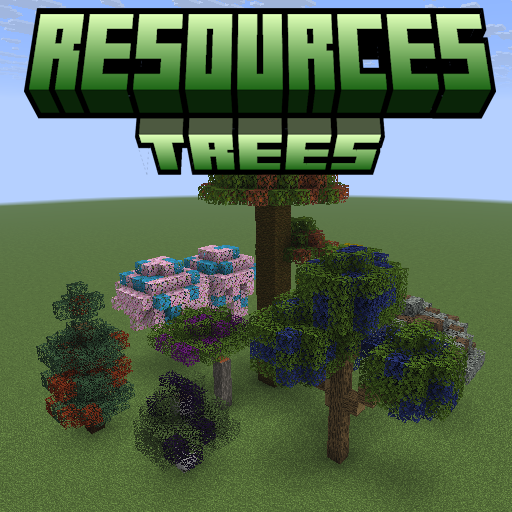
Sapling Recipes
The resourcestrees:resources_sapling recipe type defines which vanilla sapling maps to which Resources Sapling block. This is used by the cross-pattern crafting recipe.
When to Use
You only need this recipe type if you are:
- Registering a new custom Resources Sapling block via a companion mod or KubeJS.
- Mapping an additional vanilla sapling to an existing Resources Sapling block.
For custom resource types added via datapack, the 8 existing sapling recipes already cover all tree shapes. No new recipe is needed.
File Location
data/<namespace>/recipe/<name>.jsonRecipe Format
{
"type": "resourcestrees:resources_sapling",
"baseSapling": {
"id": "<vanilla_sapling_item_id>"
},
"resourcesSapling": {
"id": "<resources_sapling_block_item_id>"
}
}| Field | Description |
|---|---|
baseSapling | The vanilla sapling placed in the center of the crafting grid. |
resourcesSapling | The Resources Sapling block item produced by the recipe. |
The material in the cardinal slots is dynamically matched against all registered ResourcesTypes. No material field is needed — the recipe works for all types automatically.
Built-in Recipes
The mod ships 8 built-in recipes:
| Recipe ID | Base Sapling | Resources Sapling |
|---|---|---|
resourcestrees:saplings/resources_oak_sapling | minecraft:oak_sapling | resourcestrees:resources_oak_sapling |
resourcestrees:saplings/resources_spruce_sapling | minecraft:spruce_sapling | resourcestrees:resources_spruce_sapling |
resourcestrees:saplings/resources_birch_sapling | minecraft:birch_sapling | resourcestrees:resources_birch_sapling |
resourcestrees:saplings/resources_jungle_sapling | minecraft:jungle_sapling | resourcestrees:resources_jungle_sapling |
resourcestrees:saplings/resources_acacia_sapling | minecraft:acacia_sapling | resourcestrees:resources_acacia_sapling |
resourcestrees:saplings/resources_dark_oak_sapling | minecraft:dark_oak_sapling | resourcestrees:resources_dark_oak_sapling |
resourcestrees:saplings/resources_cherry_sapling | minecraft:cherry_sapling | resourcestrees:resources_cherry_sapling |
resourcestrees:saplings/resources_pale_oak_sapling | minecraft:pale_oak_sapling | resourcestrees:resources_pale_oak_sapling |
Example: Custom Sapling Block
data/mymod/recipe/saplings/my_crystal_sapling.json
{
"type": "resourcestrees:resources_sapling",
"baseSapling": {
"id": "minecraft:birch_sapling"
},
"resourcesSapling": {
"id": "mymod:my_crystal_sapling"
}
}This allows players to craft mymod:my_crystal_sapling (with any resource type) using a birch sapling + material cross pattern.
KubeJS
If you registered a custom sapling via the KubeJS plugin, the recipe is automatically generated — you do not need to write it manually. See KubeJS Custom Saplings.
Fragment Crafting Recipes
Fragment → resource shaped crafting recipes can be added via datapack using the resourcestrees:strict_shaped recipe type.
The ingredient key syntax differs slightly between loaders — use neoforge:ingredient_type on NeoForge and fabric:type on Fabric.
Recipe Format
{
"type": "resourcestrees:strict_shaped",
"category": "building",
"key": {
"A": {
"neoforge:ingredient_type": "resourcestrees:resources_type",
"base": "resourcestrees:leaf_fragment",
"components": {
"resourcestrees:resources_type": "<type_key>"
}
}
},
"pattern": [
" ",
"AAA",
" "
],
"result": {
"count": "<int>",
"id": "<item_id>"
}
}{
"type": "resourcestrees:strict_shaped",
"category": "building",
"key": {
"A": {
"fabric:type": "resourcestrees:resources_type",
"base": "resourcestrees:leaf_fragment",
"components": {
"resourcestrees:resources_type": "<type_key>"
}
}
},
"pattern": [
" ",
"AAA",
" "
],
"result": {
"count": "<int>",
"id": "<item_id>"
}
}Fields
| Field | Description |
|---|---|
neoforge:ingredient_type / fabric:type | Declares the custom ingredient type. Use resourcestrees:resources_type. |
base | Must be resourcestrees:leaf_fragment. |
components."resourcestrees:resources_type" | The resource type key this ingredient requires (e.g. resourcestrees:amethyst). |
pattern | Standard 3×3 shaped crafting pattern. Use spaces for empty slots. |
result | The output item, with optional count. |
Example: Amethyst Shard (Line Pattern)
{
"type": "resourcestrees:strict_shaped",
"category": "building",
"key": {
"A": {
"neoforge:ingredient_type": "resourcestrees:resources_type",
"base": "resourcestrees:leaf_fragment",
"components": {
"resourcestrees:resources_type": "resourcestrees:amethyst"
}
}
},
"pattern": [
" ",
"AAA",
" "
],
"result": {
"count": 6,
"id": "minecraft:amethyst_shard"
}
}{
"type": "resourcestrees:strict_shaped",
"category": "building",
"key": {
"A": {
"fabric:type": "resourcestrees:resources_type",
"base": "resourcestrees:leaf_fragment",
"components": {
"resourcestrees:resources_type": "resourcestrees:amethyst"
}
}
},
"pattern": [
" ",
"AAA",
" "
],
"result": {
"count": 6,
"id": "minecraft:amethyst_shard"
}
}Example: Diamond (Cube Pattern, Custom Type)
{
"type": "resourcestrees:strict_shaped",
"category": "building",
"key": {
"A": {
"neoforge:ingredient_type": "resourcestrees:resources_type",
"base": "resourcestrees:leaf_fragment",
"components": {
"resourcestrees:resources_type": "resourcestrees:diamond"
}
}
},
"pattern": [
"AAA",
"AAA",
"AAA"
],
"result": {
"count": 4,
"id": "minecraft:diamond"
}
}{
"type": "resourcestrees:strict_shaped",
"category": "building",
"key": {
"A": {
"fabric:type": "resourcestrees:resources_type",
"base": "resourcestrees:leaf_fragment",
"components": {
"resourcestrees:resources_type": "resourcestrees:diamond"
}
}
},
"pattern": [
"AAA",
"AAA",
"AAA"
],
"result": {
"count": 4,
"id": "minecraft:diamond"
}
}Multi-Type Recipe (Two Different Fragments)
You can define multiple ingredient keys using different resource types:
{
"type": "resourcestrees:strict_shaped",
"category": "building",
"key": {
"A": {
"neoforge:ingredient_type": "resourcestrees:resources_type",
"base": "resourcestrees:leaf_fragment",
"components": { "resourcestrees:resources_type": "resourcestrees:dirt" }
},
"B": {
"neoforge:ingredient_type": "resourcestrees:resources_type",
"base": "resourcestrees:leaf_fragment",
"components": { "resourcestrees:resources_type": "resourcestrees:water" }
}
},
"pattern": [
"BA ",
"AB ",
" "
],
"result": {
"count": 12,
"id": "minecraft:clay_ball"
}
}{
"type": "resourcestrees:strict_shaped",
"category": "building",
"key": {
"A": {
"fabric:type": "resourcestrees:resources_type",
"base": "resourcestrees:leaf_fragment",
"components": { "resourcestrees:resources_type": "resourcestrees:dirt" }
},
"B": {
"fabric:type": "resourcestrees:resources_type",
"base": "resourcestrees:leaf_fragment",
"components": { "resourcestrees:resources_type": "resourcestrees:water" }
}
},
"pattern": [
"BA ",
"AB ",
" "
],
"result": {
"count": 12,
"id": "minecraft:clay_ball"
}
}File Location
Place your recipe files in data/<namespace>/recipe/<name>.json inside your datapack. Use a unique namespace to avoid conflicts with built-in recipes.
JEI
Custom strict_shaped recipes are visible in JEI. The ingredient slots will show the required fragment type. Make sure your recipe key uses the exact resourcestrees:resources_type component value matching the type you registered.
